

Research conducted
The experiment was planted into fine sandy loam at 168,000 seeds/A on May 28 using seed treated either with or without 0.75 fl oz/140,000 seeds Saltro (a.i. pydiflymetofen). Saltro is labeled for plant parasitic nematodes including soybean cyst nematode. Ferrilene, a liquid, EDDHA-chelated form of iron (6%) was also applied at 27 lb/A (3 gallons of product + 2 gallons of water/A) to some plots in-furrow at planting. Treatments included: untreated control (UTC), Saltro + Ferrilene, Saltro alone and Ferrilene alone. Each 700 ft strip plot was planted in a RCB design with six replicates in ten 22 inch rows and harvested using a John Deere combine. Plot yields were determined with a weigh wagon and samples collected to estimate soybean moisture and test weigh. IDC severity ratings and plant stands were assessed in plots.
Findings
(IDC) symptoms differed among experimental treatments, with greater severity in plots without than in plots with in-furrow iron applied at seeding. Interestingly, plots without iron, but planted to Saltro-treated seed had lower severity than UTC plots. Soybean yields averaged higher than 60 bu/acre; UTC and Saltro-only plot yields were lower and statistically similar than the statistically similar yields observed in plots with in-furrow iron. SCN 8-inch soil cores were collected within root zone of each plot in June and October, 2025. Fall SCN egg counts showed population growth in 79% of plots over the growing season with seasonal growth between 1,325 and 1,842 eggs/100 cc, with results statistically similar among treatments. This is the second year of this trial conducted in similar soils in the same Minnesota township, although with a higher initial SCN population density in 2025 than in 2024. While trends pointed to lower in-season SCN population growth in plots planted to seed treated with Saltro in 2024, no such trend was observed in 2025. These results are in agreement with a peer-reviewed 51 site-year series of trials in which seed treatments labeled for SCN management (including Saltro) were tested.
A
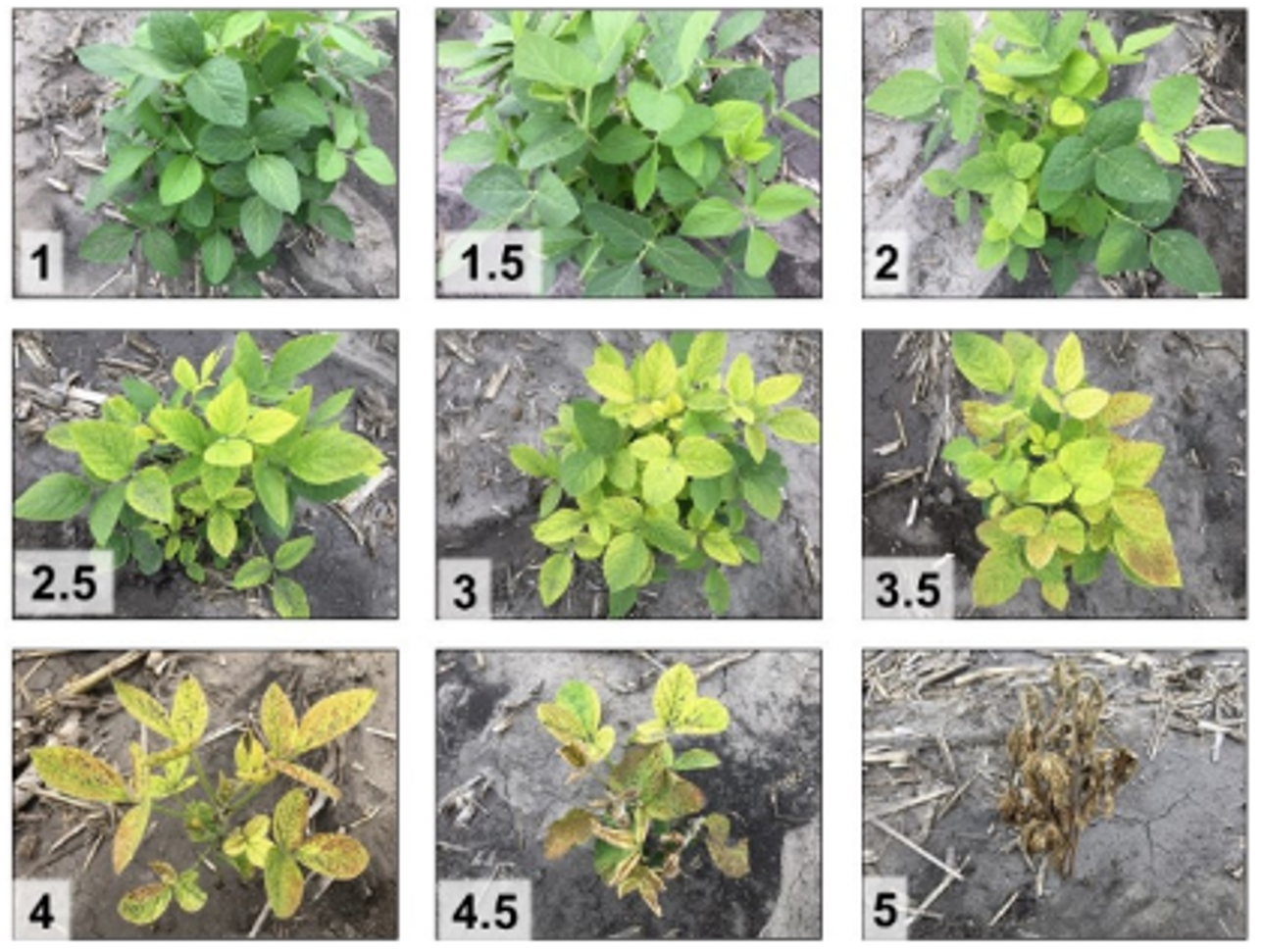
Iron deficiency chlorosis foliar ratings scale, where a score of 1 indicates green, healthy leaf tissue and a score of 5 indicates severe symptoms leading to plant death, used to estimate foliar symptoms of IDC. Source: North Dakota State University.