
Research importance
Minnesota soybean farmers continue to face new and emerging pests. With two new soybean pests found in Minnesota in the past 5 years, “boots in the field” trained to look for both current and invasive pests improve our chances of early detection. This survey expands our ability to obtain field reports on crop conditions and pest activity to tailor outreach to crop managers through radio, digital newsletters and through the ag press.
Findings
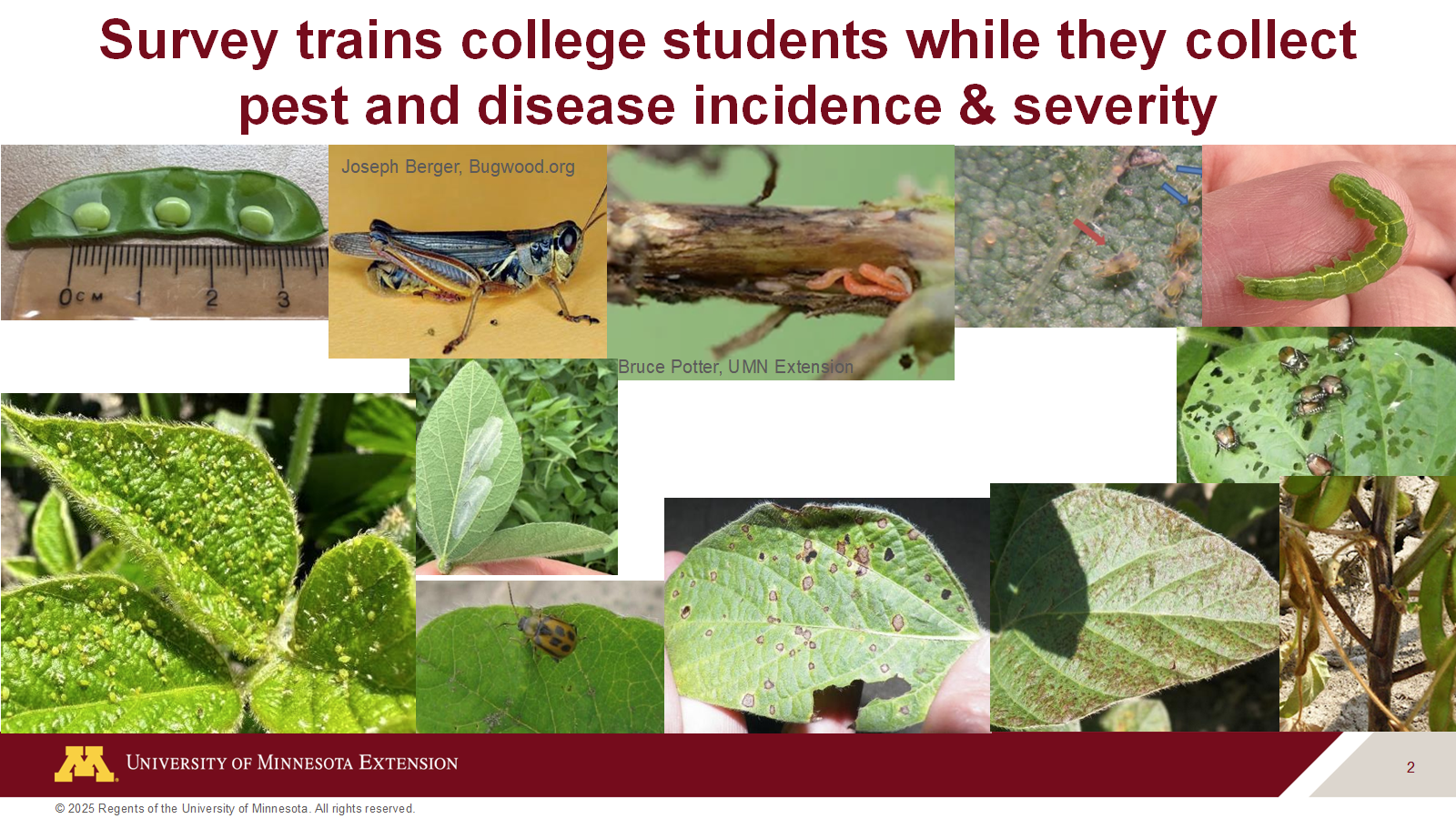
Soybeans reached full pod or beginning seed growth stages in northern locations by survey’s end, with fields further south delayed by planting delays. Soybean aphid incidence began to increase in late July, increasing to 80-100%, particularly in the central counties (Clay, Becker, Wilkin). Soybean aphid severity remained below treatment thresholds for the entire scouting season and aphids parasitized by wasp larvae were present in only nine fields. Bean leaf beetle incidence (# of beetles/50 sweeps) and feeding injury remained below treatment thresholds. The wetter than average growing season, punctuated with timely rains kept two-spotted spider mite infestations inside/on edge of fields at bay. There were no new county soybean gall midge, soybean tentiform leafminer nor Japanese beetle infestations observed in 2025. The bulk of fields with foliage feeding caterpillars were in Clay and Becker counties and south, with some fields reaching up to 50% of plants infested. Despite caterpillar infestations, only one field in Yellow Medicine County reached treatment-threshold level injury (20%+ during Rstages). While frogeye leaf spot was not observed in surveyed fields, a late-season field visit in Norman County saw the northernmost Minnesota detection to date. Cercospora leaf blight was at low incidence and one field in Wilkin County had high Phytophthora root rot incidence.