4-H 4 all: Council’s checkoff support to help grow MN’s new 4-H building
4-H 4 all: Council’s checkoff support to help grow MN’s new 4-H building
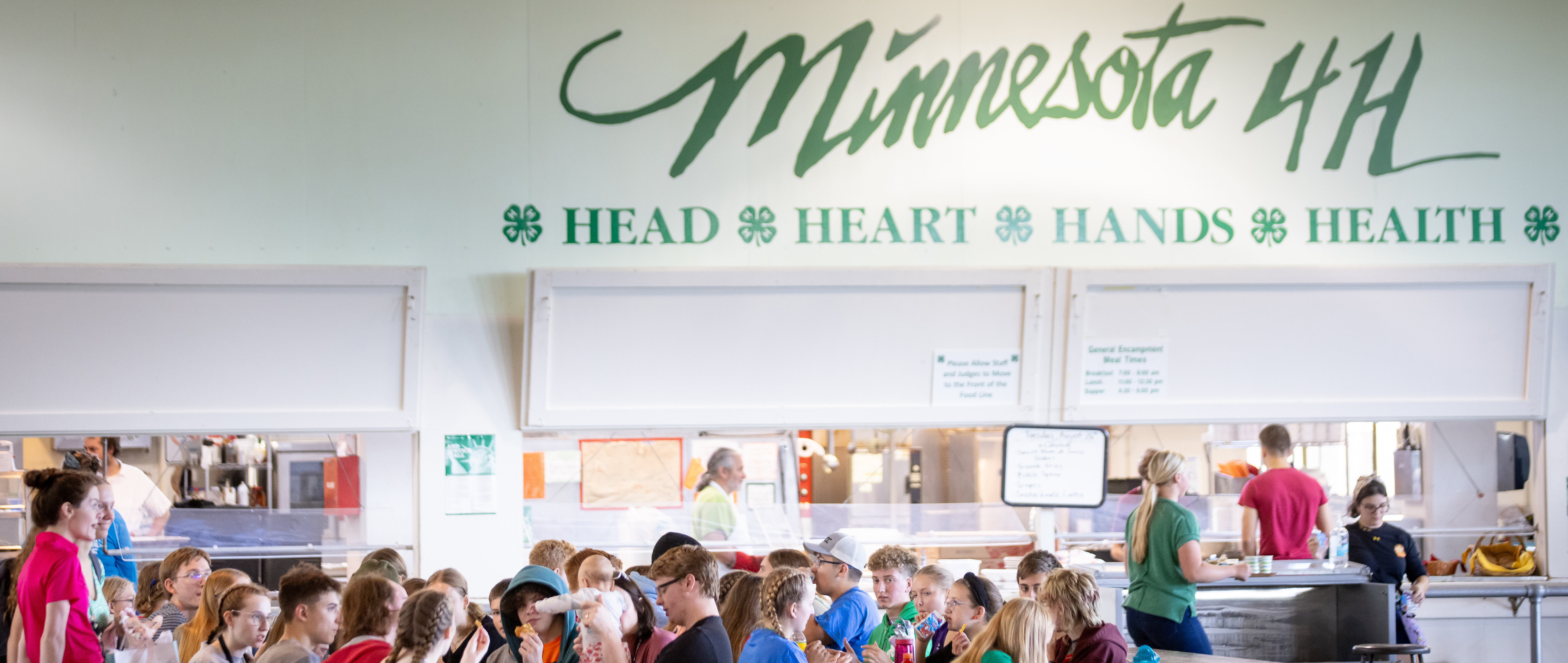
When you think about the University of Minnesota Extension, 4-H is often top of mind. 4-H is Minnesota’s largest youth development program, reaching every county in the state and over 58,000 youth every year.
“Our whole focus in our program is about helping young people develop that passion for learning,” said Jennifer Skuza, University of Minnesota Extension associate dean and state 4-H director. “We want the young people who are in the 4-H program to be innovative leaders who are also thinking about the positive impact that their leadership can have on the communities they live in, but also the environments that they live with and on as well.”
A humble beginning
The first statewide 4-H club projects were growing seed corn and baking bread in 1904, started by a school superintendent in Douglas County. The Smith-Lever Act of 1914 established the Cooperative Extension Service, and, through this, provided additional funding and federal recognition for the 4-H program. 4-H clubs became more common across the country, and the national 4-H organization was created to provide a general structure for clubs.
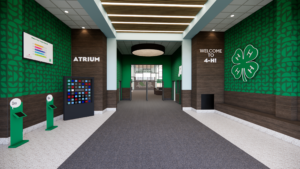
The new and improved UMN 4-H Building is expected to be ready in time for the 2027 Minnesota State Fair, thanks to checkoff support from MSR&PC.
“Since its very beginning, it’s always been about taking the research from the land grant institutions, like the University of Minnesota, and bringing it out to communities with youth, but also bringing knowledge back to the university,” Skuza said. “It’s always been that symbiotic reciprocal relationship, and 4-H has been at the forefront of it.”
4-H is more than just clubs; it extends beyond that and continues to evolve. There are many different ways to get involved beyond a local chapter. For supporters like Faribault farmer Gail Donkers, connections to 4-H run deep.
“Junior Leadership Conference was a weeklong event that brought kids in from across the state,” said Donkers, chair of the Minnesota Soybean Research & Promotion Council. “Some of my very best friends to this day are people I met at JLC.”
In 1934, a conservation leadership camp was started in Itasca. While the camp no longer exists, 4-H environmental work continues today. Urban Youth Lead, an after-school leadership group in the Minneapolis-St. Paul area, began in 2006, and the 4-H Science of Agriculture Challenge began in 2015.
New roots The “4-H Hilton,” as it is affectionately known, was built in 1939 by the Works Progress Administration on the State Fairgrounds. Since its construction nearly 90 years ago, thousands of Minnesota 4-Hers have cycled through the building.
In 2026, it was announced that the building would be updated as part of a $35 million campaign between Minnesota 4-H and the Minnesota State Fair. Construction is already underway on the exterior of the building, with completion planned by fair time in August 2027. This is the first major update to the building since 1939.
“(The exterior) is in progress where windows are being repaired or replaced — the roof was already replaced last year,” said Skuza. “If we meet all of our timelines, and it’s running on time right now, by the time the state fair gets here we’ll have most of the exterior, if not all of it done.” Beyond the standard updates, such as accessibility improvements, system upgrades, expanded restrooms and better ventilation, the entire first floor will be remodeled. This remodel will include a new performing arts stage, STEM spaces, a teaching kitchen and flexible workshop areas. Once completed, the new 4-H building hopes to reach one in 10 Minnesota youth.
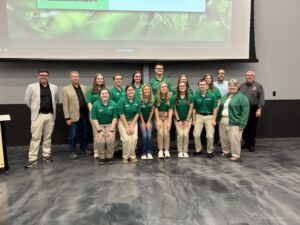
Council directors and staff welcome 4-H students during an event at Minnesota Soybean’s headquarters.
“We’re looking at having programming that’s going to be running full tilt from June until August,” said Skuza. “That’s in addition to our State Fair experience where we have over 5,000 current 4-Hers who participate.”
Soybean connections At the Council’s December 2026 meeting, UMN Extension leaders, including Dean Bev Durgan, visited with farmer leaders to outline the project’s goals and timelines. At the March 2026 board meeting, MSR&PC voted to support the campaign with checkoff support through a $250,000 donation. With this donation, MSR&PC will have a soybean display in one of the programming rooms. “
4-H is important to the Council because we’re building tomorrow’s leaders by supporting 4-H,” Donkers said. “That was my launching pad— becoming a leader within my club, then at the regional and state level.” MSR&PC has shown its support through past 4-H sponsorships, including being on the ground level when plant science programming began and helping expand 4-H’s stat e agricultural ambassadors program.
“(MSR&PC) has been with us every step of the way,” Skuza said. “We’re just really excited about the continued relationship.”