Strengthening trade in Taiwan: Minnesota Soybean staff participate in USDA trade mission
Strengthening trade in Taiwan: Minnesota Soybean staff participate in USDA trade mission
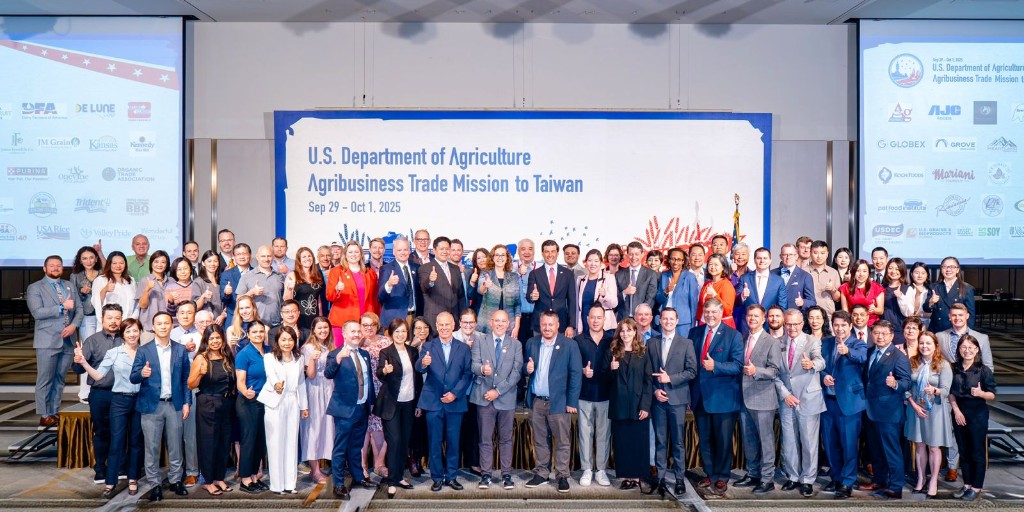
With a goal of strengthening trade relations and expanding trade opportunities, Minnesota Soybean Research & Promotion Council (MSR&PC) staff recently joined the U.S. Department of Agriculture, along with other commodity organizations and agribusinesses, on a trade mission to Taiwan, one of the largest export markets for U.S. agriculture.
“The U.S. has had a long-standing relationship with Taiwan and they’ve been a really great trade partner with the U.S. when it comes to ag products, such as soybeans, corn, wheat and various fruits,” said Joe Smentek, the Minnesota Soybean Growers Association Executive Director who represented MSR&PC on this trade visit. “I think some people see it as a mature market, but there’s a lot of growth opportunities there with even more soy and corn going into that country.”
According to the USDA, Taiwan is the eighth largest market of U.S. agricultural exports, and they are on the rise with trade growing by 16% over the last five years. From a soy-perspective, Taiwan imports soy for both human and animal consumption and there’s even interest in use for biofuels. As part of the itinerary, participants visited Taiwanese government officials as well as the companies who are importing U.S. soy. They also obtained perspective into the daily lives and culture of the people on the island.
“It is a country that eats out a lot – not a lot of home cooked meals because they have pretty small apartments – and convenience stores are actually a growing source of where they eat out at,” said Smentek. “So along with the opportunity to import more soy there is also the interest in importing more meat products to fit some of those needs.”
Joining Smentek on the trip from Minnesota was Shane Frederick, director of market development and promotion for MSR&PC and the Specialty Soya and Grains Alliance (SSGA), who used the opportunity to promote the U.S. Identity Preserved (IP) brand program, which assures customers of the grains and oilseed products that are purchasing are safe, secure, high-quality products that are grown with a purpose.
“For those who weren’t familiar with identity preserved it was an opportunity to promote what it is and the benefits, and for those who were familiar it was good to get feedback, how we can grow it and how we can reach their customers so that the label can get more recognition,” said Frederick, who is returning to Taiwan in a few weeks to accompany the Northern Crops Institute to study their methods of producing food-grade soy products such as tofu and soy milk.
Frederick also notes that the trade mission to Taiwan, which was led by USDA Under Secretary for Trade and Agricultural Affairs Luke J. Lindberg, also provided a rare opportunity to spend time with the high-ranking USDA official, as well as network with other commodity groups and agricultural business leaders.
“That’s time you don’t usually get or aren’t able to schedule, so to travel with him and spend some time discussing who you are and what you do is invaluable,” said Frederick. “At the same time, you were able to network with other trade associations and businesses from across the country to discuss their challenges and opportunities, and we’re all trying to do the same thing – promote agriculture.”
According to Smentek, trade missions like this one to Taiwan are important for maintaining healthy relationships with the countries in which the U.S. does business. With the current rocky relationship with Taiwan’s neighbor, China, who has historically been the largest purchaser of U.S. soy, the trade mission to Taiwan, which was cut short due to the government shutdown, offered a silver lining.
“It was good to see that there is a market out there that still values U.S. soy and that we have partners on the other side that want to get deals done. It gives me hope that we can get over this China speedbump and move on and get some more exports out of the west coast to countries like Taiwan,” Smentek said.
Shortly after the trade visit, the Taiwan Vegetable Oil Manufacturers Association signed a deal to purchase between $3.44 billion and $4.2 billion worth of U.S. soybeans over the next four years.