
Summary Content
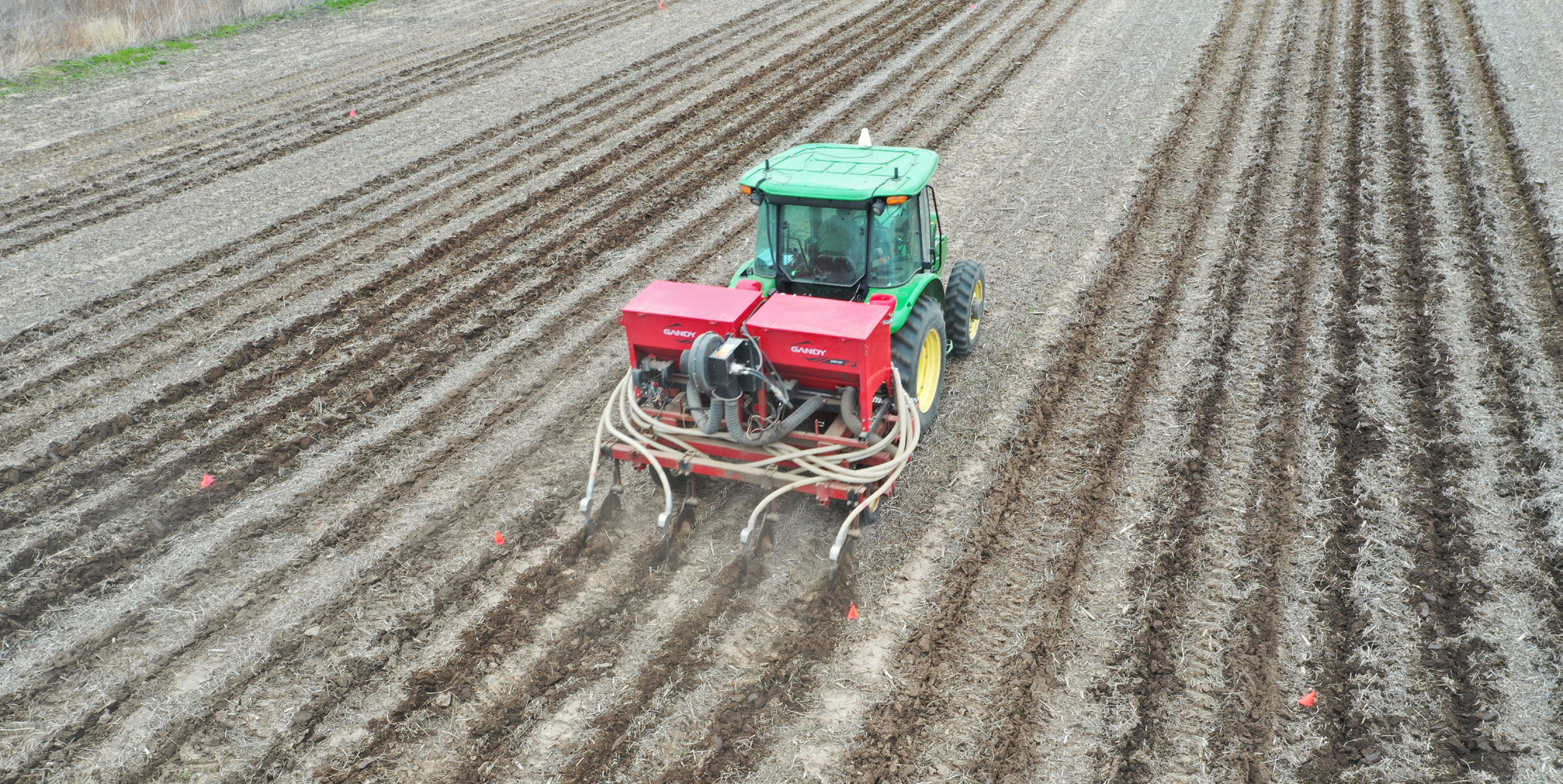
With sulfur use increasing in Minnesota, there have been questions regarding whether the routine application of sulfur should be considered by soybean producers. Past research in Minnesota has shown that soybeans can respond to sulfur, but typical rates applied ahead of corn more than 10 lbs of sulfur per acre are sufficient to supply sulfur for both crops. A study was established in 2022 comparing different sources of sulfur broadcast and banded ahead of corn on yield of both corn and soybean grown in a two-year rotation.
The sources of sulfur were chosen to compare elemental sulfur and sulfate where some sources of fertilizer like ammonium sulfate and elemental sulfur can result in soil acidification. Pell lime was included to offset acidification. To date there has been no yield increase due to pell lime application to corn or soybean.
Findings
There was no increase in corn or soybean grain yield at all four locations over the first corn-soybean rotation. A second corn-soybean rotation was established at two locations re-applying fertilizer to the same plots at two locations in 2025. Corn grain yield was increased for all sources of sulfur regardless of whether the sulfur was broadcast or banded at the two locations. Research data indicates that soybean did take up additional sulfur that was left in the soil following sulfur application before corn where yield was not affected and the additional sulfur only benefitted some soybean seed quality parameters. The primary findings of this study to date.
Like past studies, we have demonstrated that sulfur applied in the sulfate form will carry over from one year to the next. A direct application of sulfur ahead of soybeans is not needed if sulfur is available in the soil or there is some leftover sulfur not used by the corn.
The lack of sulfur response during the first two years was likely a result of past applications of sulfur that are carried over from previous years’ applications. Carryover of sulfur needs to be considered when planning research trials.
Soybeans are more likely to respond to sulfur by increasing cysteine and methionine concentration more than increasing grain yield. This increase in amino acids proves that sulfur applied ahead of corn is available to the soybean plant but is not necessarily required to increase seed yield.