
Research importance
Drought and erratic water availability represent massive challenges for Minnesota soybean growers, with coarse soils and shallow soils frequently triggering severe yield losses and disappointing yields in drought-prone pockets consistently drag down whole-farm profitability. This project investigates whether elite soybean varieties possess intrinsic physiological differences that allow them to handle water stress better than their counterparts.
Findings
- The Stability Paradox: Varieties like P16Z25E established excellent yield stability and high overall productivity across all environments. Conversely, AG16XF5 matched it in average yield but displayed high sensitivity, showing steep yield drops when conditions deteriorated.
- Low Yields, High Risk: The most stable varieties (XO1545E and 16EC32E) unfortunately produced the lowest average yields across the board.
- Widening Gaps: Crucially, the yield gap between different varieties did not shrink under tough conditions. In low-yielding, drought-stressed environments, performance differences between varieties spanned 10% to 20%, proving that variety selection is actually more critical in poor soils than in premium ones.
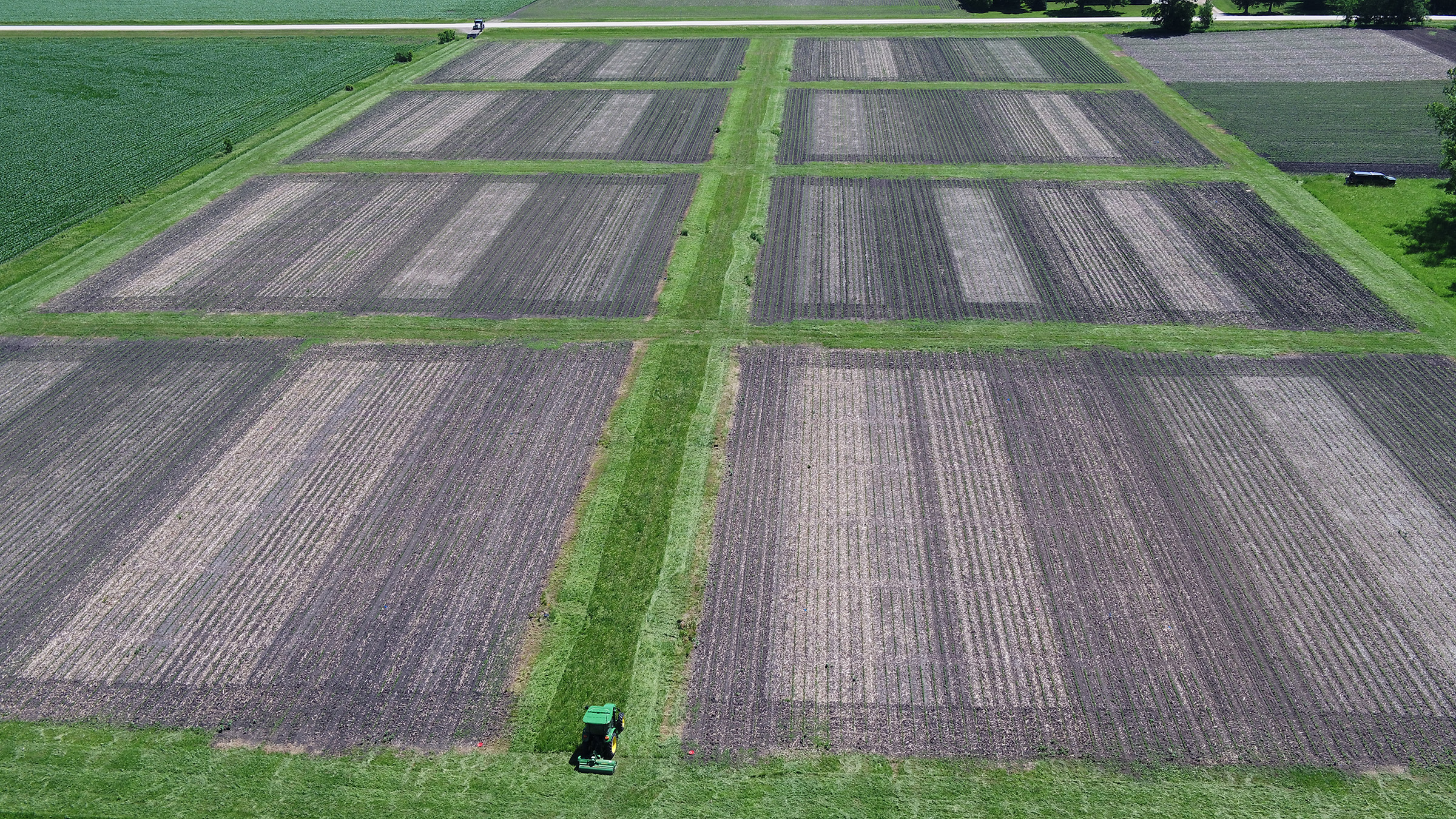
Drone view of drainage site.