
Research importance
Modern biotechnologies, such as genetic transformation and gene editing, can be used to advance understanding of the genes that control critical traits in soybean, and identify modifications of these genes for trait improvement. This project provides the base funding to support soybean biotechnology at the University of Minnesota. This facility is used to study the genes involved in determining major traits in soybean, including seed composition, architecture, iron deficiency chlorosis, disease resistance and pest resistance.
Findings
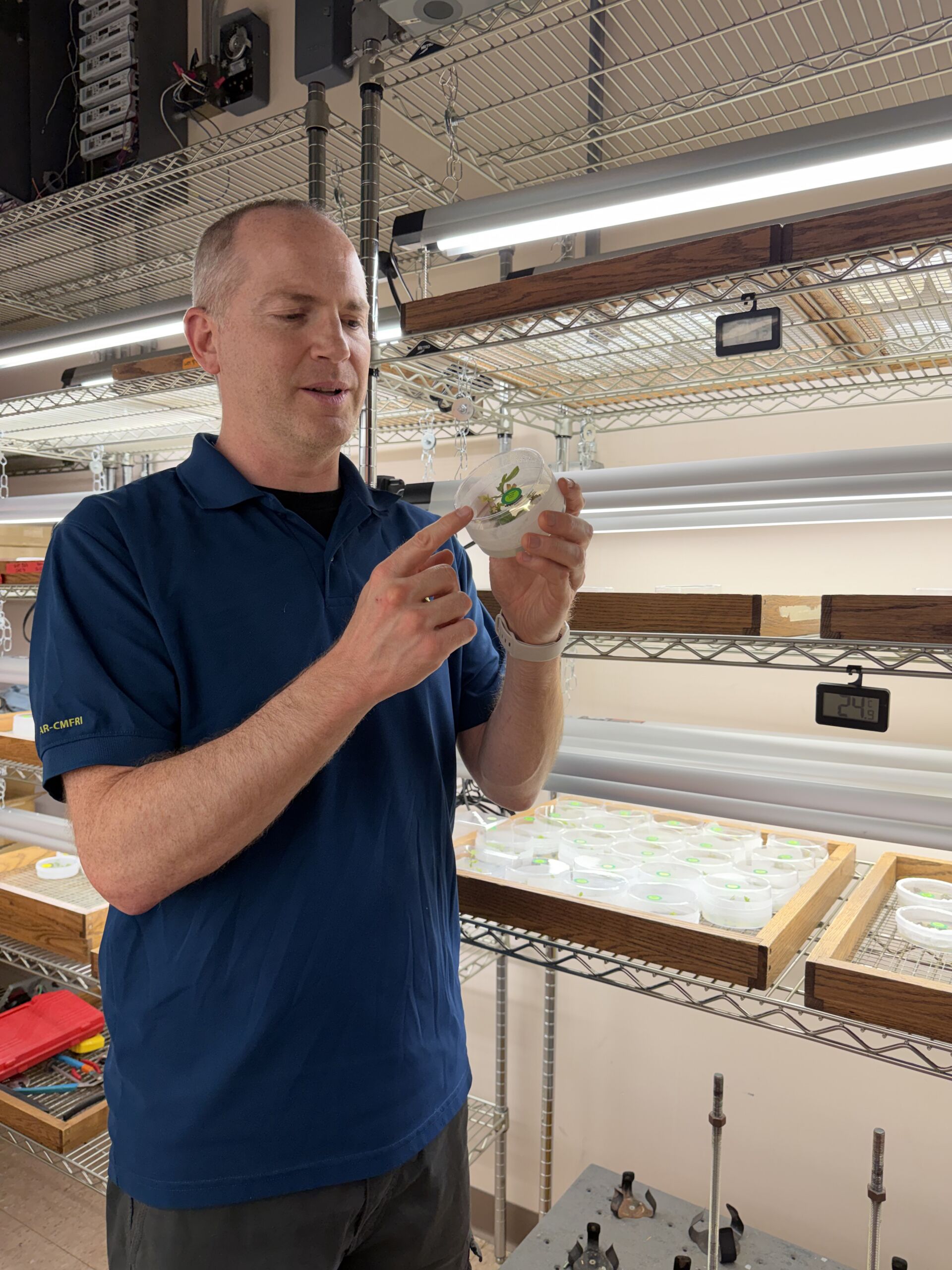
The transformation and gene editing process is continually ongoing. In the past year, we have developed gene edits for several genes of interest, including those hypothesized to be involved in seed composition, plant architecture and iron deficiency chlorosis. We have done preliminary field testing for the more advanced events and initiated biochemical studies for the seed composition lines.
Genetic transformation and gene editing offer the potential for the development of novel traits for soybean farmers. Furthermore, these studies using these technologies provide insight into the most important genes that underlie these traits and can thus better inform the selection of these genes using conventional breeding. The goal is to identify the most valuable genes/traits and the most efficient and effective way to bring them into the breeding germplasm, thus improving the value and reliability of the soybean varieties available to Minnesota soybean growers.
A
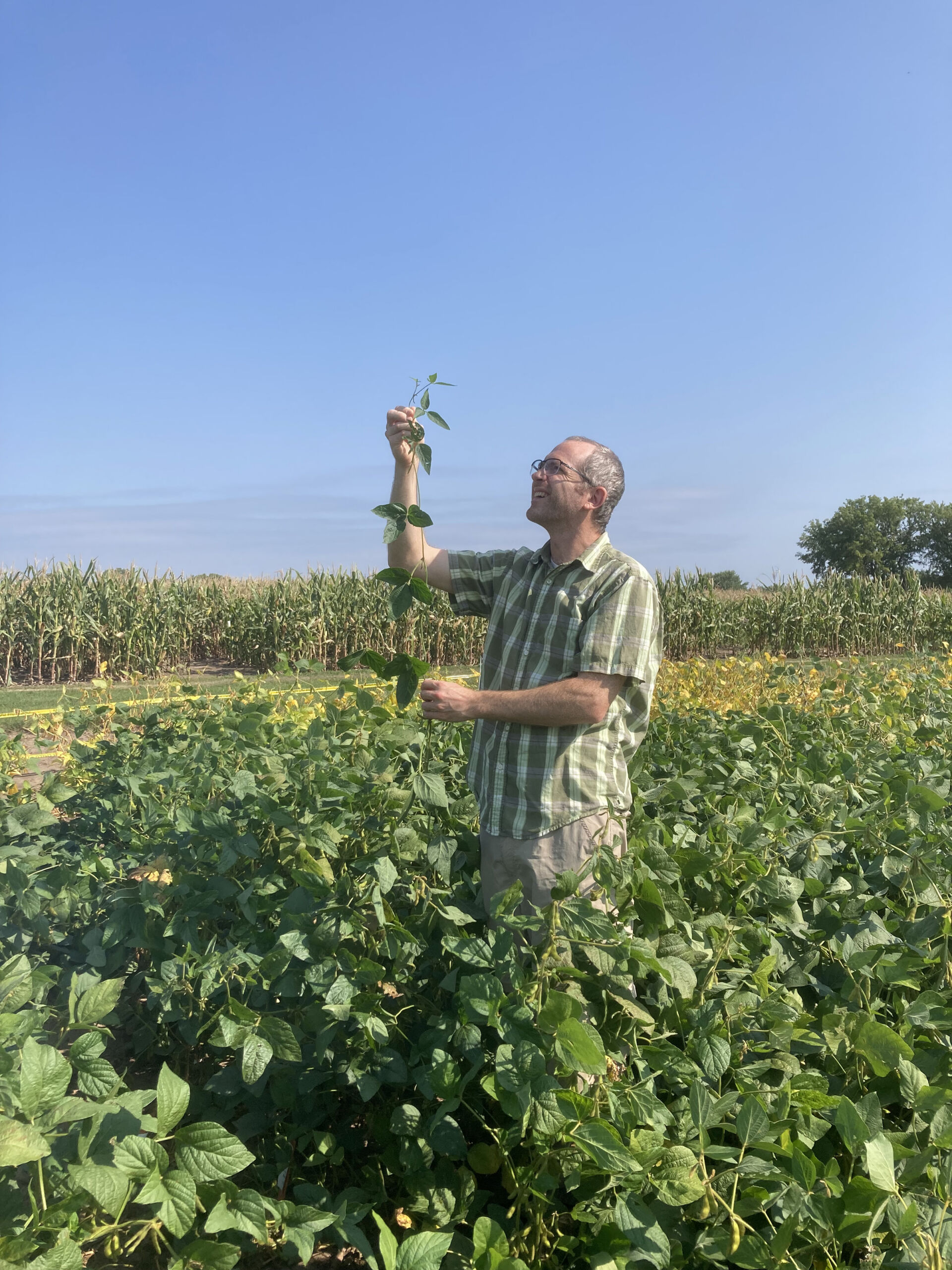
Robert Stupar examining young gene-edited plants during the tissue culture stage.