
NW MN Tillage Expo digs deep into tillage options
NW MN Tillage Expo digs deep into tillage options
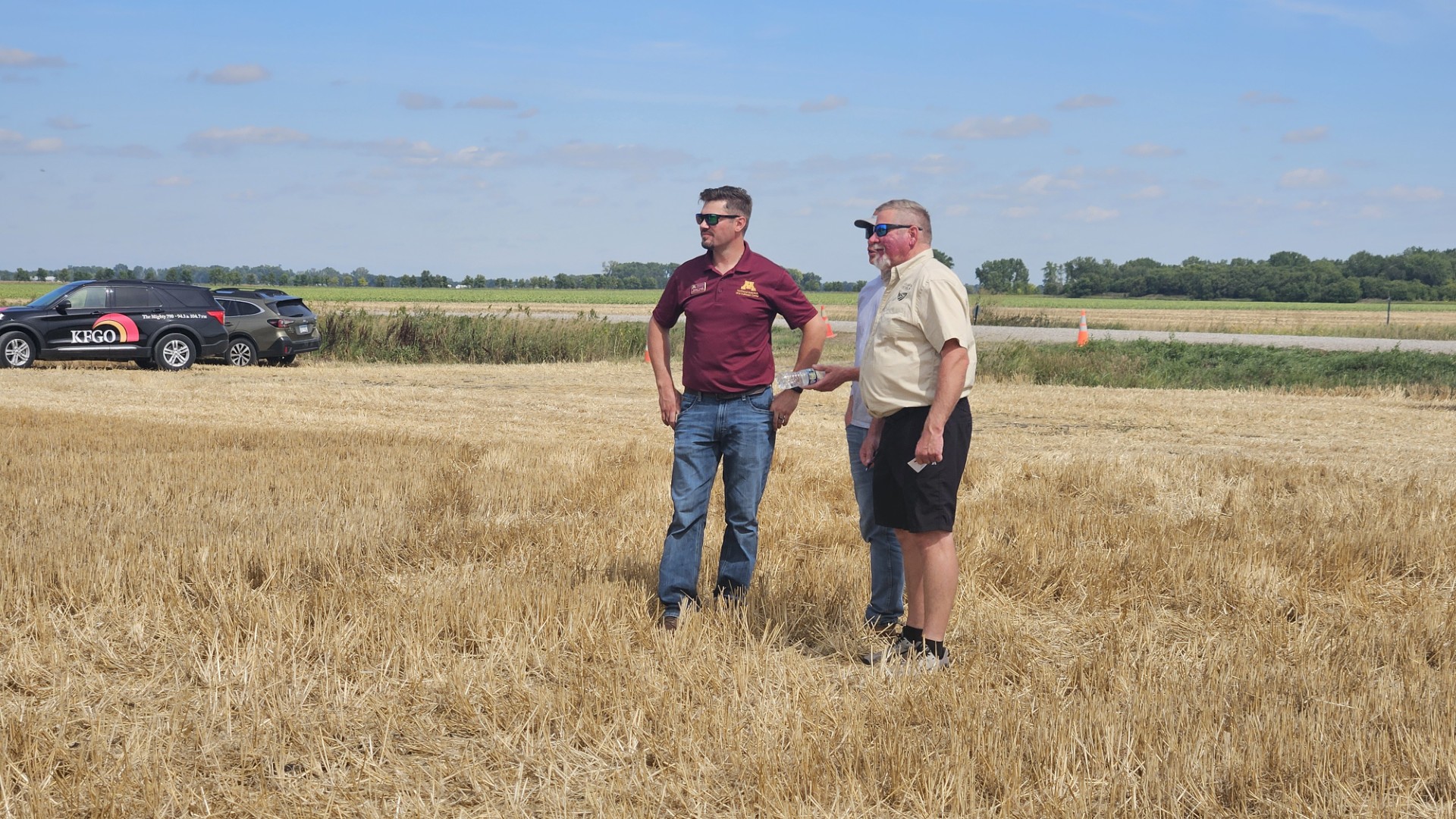
A legendary Minnesota-born folk singer, Bob Dylan, once sang, “the times they are a-changin’.”
Well, so are farmers’ tillage options and the need for them. In the wake of recent Dust Bowl-like springs that saw dirt drifting from field to field and into ditches in the flat and relatively structure-less region, the University of Minnesota and Northwest Research & Outreach Center hosted the Northwest Minnesota Tillage Expo Sept. 1 in Crookston. The event provided education and outreach about how the tillage tools you choose today can have a lasting impact on your soil, your crop and your bottom line.
“This year we saw a lot of soil erosion from wind and that comes from doing a lot of tillage and not keeping the soil protected with residue,” said Jodi DeJong-Hughes, University of Minnesota regional extension educator. “So, we thought, well, let’s do a tillage expo where we look at all the tillage pieces and practices out there and how we can use them to leave more residue on the surface.”
The NW MN Tillage Expo featured presentations from farmers, researchers and educators about what tillage means for soil structure, wind erosion and water infiltration; how to adjust aggressiveness of current tillage implement; manage full nutrients; making planter adjustments for planting into more residue. Attendees also heard from a panel of experienced local farmers about how they use these tillage practices on their farms and what they have learned along the way.
In addition to presentations and panels, participants got hands-on learning from rain and wind demos and got to see in-field examples of tillage passes from various tillage pieces to learn how each one of those implements work and how slight adjustments can impact residue.
As Mr. Dylan might sing: “The answer, my friend, is blowing in the wind.”
“It showed how even just changing your tillage slightly can change the quality of soil and that you don’t have to make drastic changes, because not every reduced tillage or no-till practices works for every farm, but small things like changing shovel points can make a world of difference,” said Dave Garry, District 1, 2 & 3 director from the Minnesota Soybean Research & Promotion Council, which sponsored the Tillage Expo. “It was great to get up-close and personal and see the difference from each unique pass.”
According to DeJong-Hughes, field day events have dropped in attendance numbers over the last handful of years, but that was not the case at the NW Minnesota Tillage Expo, which had roughly 80 people in attendance, and other similar tillage events.
“A lot of it comes down to economics and the farmers bottom line,” said DeJong Hughes, who also hosted a Strip-till Expo this week at the Southwest Research and Outreach Center in Lamberton. “Fuel prices have gone way up and one way we can reduce our costs is by reducing our tillage, but yet still maintain our yields and make our soil better.”
Garry adds that it’s important that farmers continue to explore tillage options and do some “digging” into what practices could be implemented on their farm if they hope to maintain the most important ingredient needed to grow soybeans and other commodities on their farm: the soil.
“After this spring, which had people talking about another dust bowl, I think it really opened people’s eyes that if this drought continues, we’re going to have a real problem on our hands,” Garry said
. “We all need to work together and do a better job when it comes to residue management and conservation so that we can keep our dirt in our own fields and not your neighbors.”
Along with MSR&PC, the NW MN Tillage Expo was also sponsored by Minnesota Corn, Minnesota Association of Wheat Growers, Minnesota Wheat Research & Promotion Council, UMN Extension, UMN Northwest Research & Outreach Center, UMN Climate Adaptation Partnership, West Polk County and Red Lake County Soil & Water Conservation District, UMN Minnesota Office for Soil Health and Valley Plains Equipment.