Summary Content
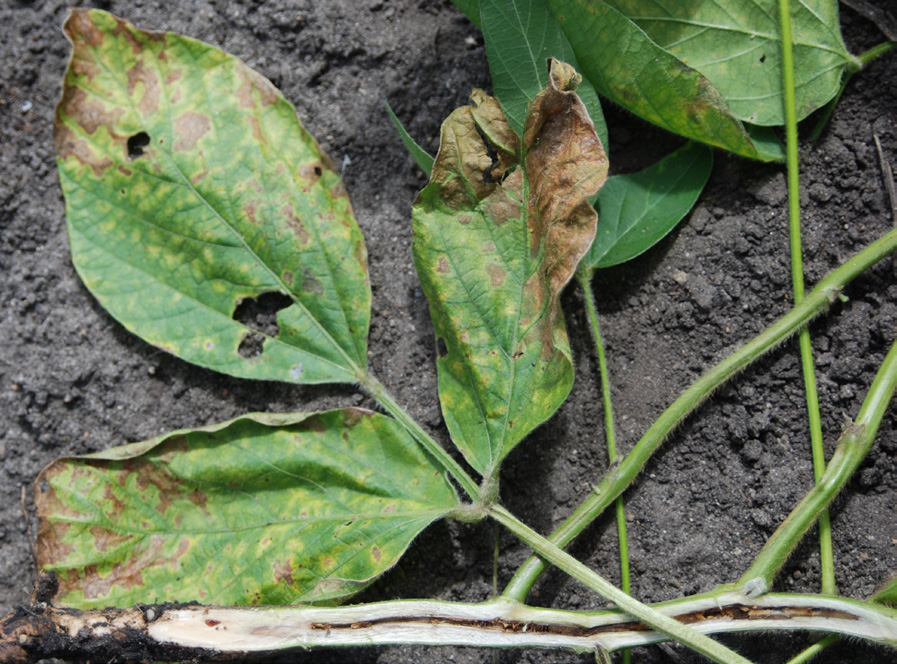
This project centers on research into managing yield and quality limiting effects of the soybean stem diseases brown stem rot and pod and stem blight. These diseases are widespread and problematic in soybean production fields across Minnesota. Crop rotations and resistant varieties can suppress brown stem rot (BSR), but yield loss still occurs. The most effective methods to manage pod and stem blight (PSB) are poorly understood. The potential of seed treatment fungicides for managing BSR and PSB has been unclear despite their widespread use. This research addresses approaches to improve management of these diseases.
Research was conducted in the field, greenhouse and lab to advance tactics to manage BSR and PSB. Soybean breeding lines and varieties were evaluated in replicated studies to identify and characterize resistance to BSR and to PSB. We also worked to develop and validate a higher throughput method to evaluate soybean lines for resistance to BSR that is less subject to environmental variability. Field studies in Waseca and Rosemount, as well as greenhouse and lab studies, were completed to determine if seed treatments and foliar fungicides are effective against these diseases.
Findings
This project addresses short and long-term goals to manage the common and damaging diseases BSR and PSB. The soybean lines that were evaluated for resistance to BSR and PSB differed in their resistance to these diseases. This information is being incorporated into the UMN soybean breeding program to minimize susceptibility to BSR and PSB as more advanced lines and varieties are developed. Our evaluation of new disease screening methods suggests that they may be able to reduce time and challenges with evaluating resistance to BSR. Lab studies suggest that some fungicide seed treatments can suppress growth of the BSR pathogen, however, they have not provided similar suppression of BSR in the field. Seed treatments did not suppress PSB in our experiments and this disease did not develop sufficiently in the field to assess the efficacy of foliar fungicides. More work is needed to understand the potential value of fungicides for these diseases.
This research improves understanding and management of key soybean stem diseases. Results have been transferred through production meetings and field days, scientific meetings, and agricultural news outlets. The ultimate benefit to soybean growers is increased yields and reduced risk of lost yields due to disease.