
Storing soy: Tips on keeping beans safe, dry
Storing soy: Tips on keeping beans safe, dry
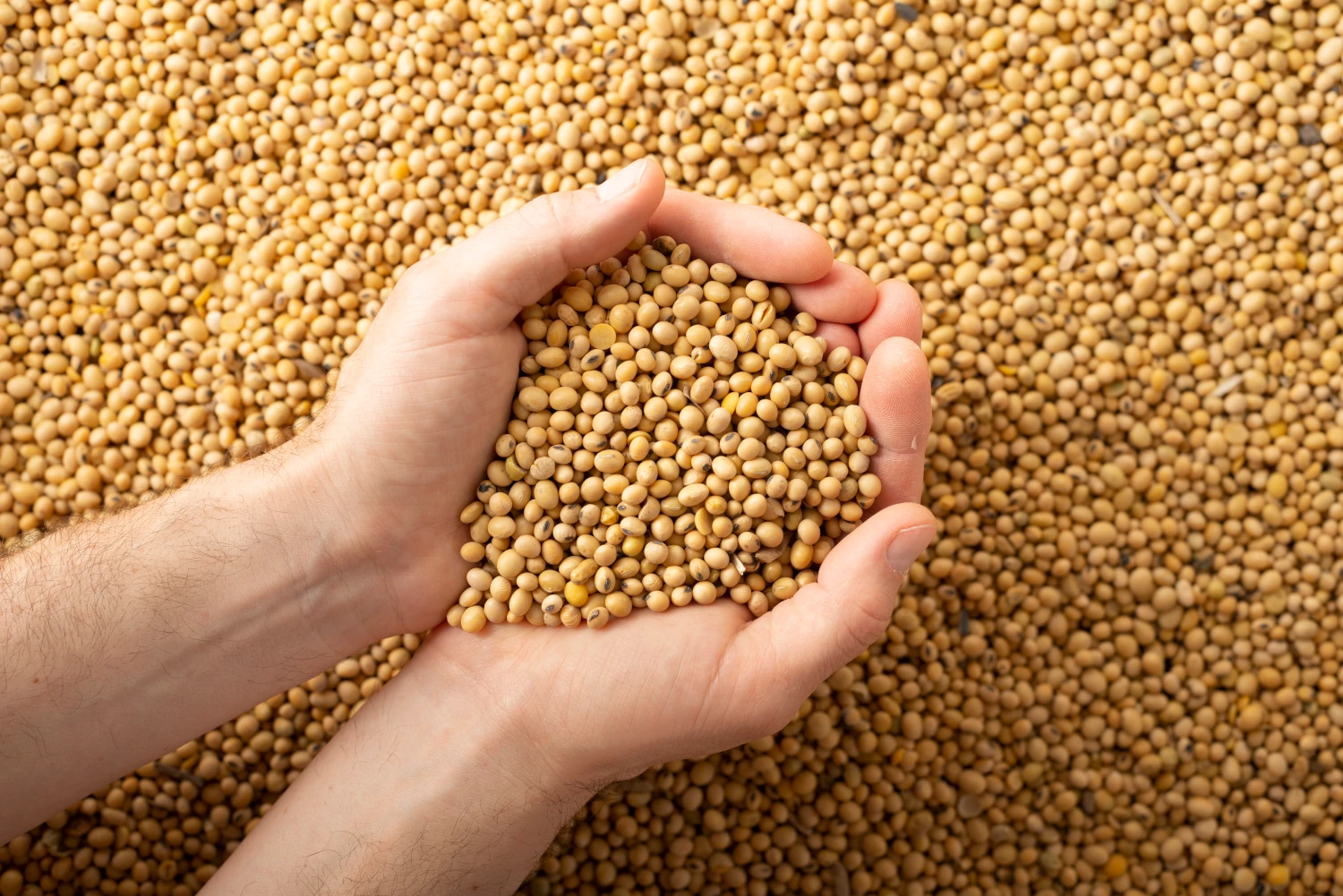
While we wait (and wait!) for trade tensions among the U.S. and China to thaw, soybean harvest doesn’t stop. Thus, the billion-dollar question looms: What do we do with all these soybeans?
Tariffs have been a major factor in soybean marketing this year, as most of the beans shipped out of the Pacific Northwest (PNW) head toward China. Minnesota soybean farmers are heavily reliant on trade: Growers export more than half their beans, most of which head to China. In total, Minnesota typically exports over $2 billion in soybeans each year. Without that market certainty, some elevators Midwest have stopped beans at the elevator, and farmers are scrambling to find storage for an uncertain amount of time.
To add to the difficulties, the derecho that blew through North Dakota and northwest Minnesota in spring 2025 – along with other severe weather Minnesota and the rest of the Midwest saw this growing season – has taken out some farmers’ storage facilities.
“Between the lack of markets and the lack of storage space, farmers and others are looking at needing to store soybeans,” said Ken Hellevang, professor emeritus and retired North Dakota State University Extension agricultural engineer. “If we use a few years ago as an example, the ripple effect lasted well into the summer and so even if they were to start exporting beans now, we would likely be storing soybeans at least partway if not fully through the coming summer.”
Different options for storage
Even without specific grain storage buildings, there are multiple options for how to store soybeans. Poly bags and grain piles are two temporary options for storage.
“As long as they follow recommended practices, either option should be successful,” said Hellevang.
A critical component to remember with any long-term storage option is moisture. Hellevang explains that there’s a difference between storage moisture content and market moisture.
“The market moisture content for soybeans is 13%, and if we’re talking short-term storage into or through part of the winter, we can store 13% soybeans just fine,” he said. “But if we start looking at storing into late winter, spring and summer where we’re looking at warmer temperatures, 13% is too wet. In order to store soybeans and prevent mold growth under the warmer temperatures, we really need to be down somewhere around 11% or 12% moisture.”
Any additional precipitation can negatively affect moisture levels, so any grain stored outside needs to be located in a well-drained area and covered to protect grain on all sides. These types of storage don’t protect from mold growth or insect pressure, adding additional layers of concern.
When storing in poly bags, orientation is a key factor to manage moisture – bags should be stored in a North to South orientation.
“The reason for that orientation is that you get even heating with the solar heat gain on the East and the West morning and afternoon, where if we run them East and West, now we have the solar heat gain on the South side with the North side being cooler and moisture will tend to accumulate in the cooler locations,” said Hellevang.
Hellevang also emphasizes that farmers need to watch the moisture levels of their soybeans.
“They change moisture content very rapidly,” he said. “It’s not uncommon for our moisture meters to be fooled. Most of the moisture meters are more sensitive to the outside surface than the inside. So, we might have soybeans that have been re-wet and all of a sudden it looks like they’re 14% but the inside might be still at 11 or 10% moisture. So, I encourage people to keep that in mind, maybe collect the sample, recheck it a few hours later after the moisture has had an opportunity to even out within the kernel, to verify that we have the moisture content that we think we have.”
For a more in-depth analysis, Hellevang wrote this article with NDSU Extension.