
The right soybeans seed for your farm: What SCN research Is showing in Minnesota
The right soybeans seed for your farm: What SCN research Is showing in Minnesota
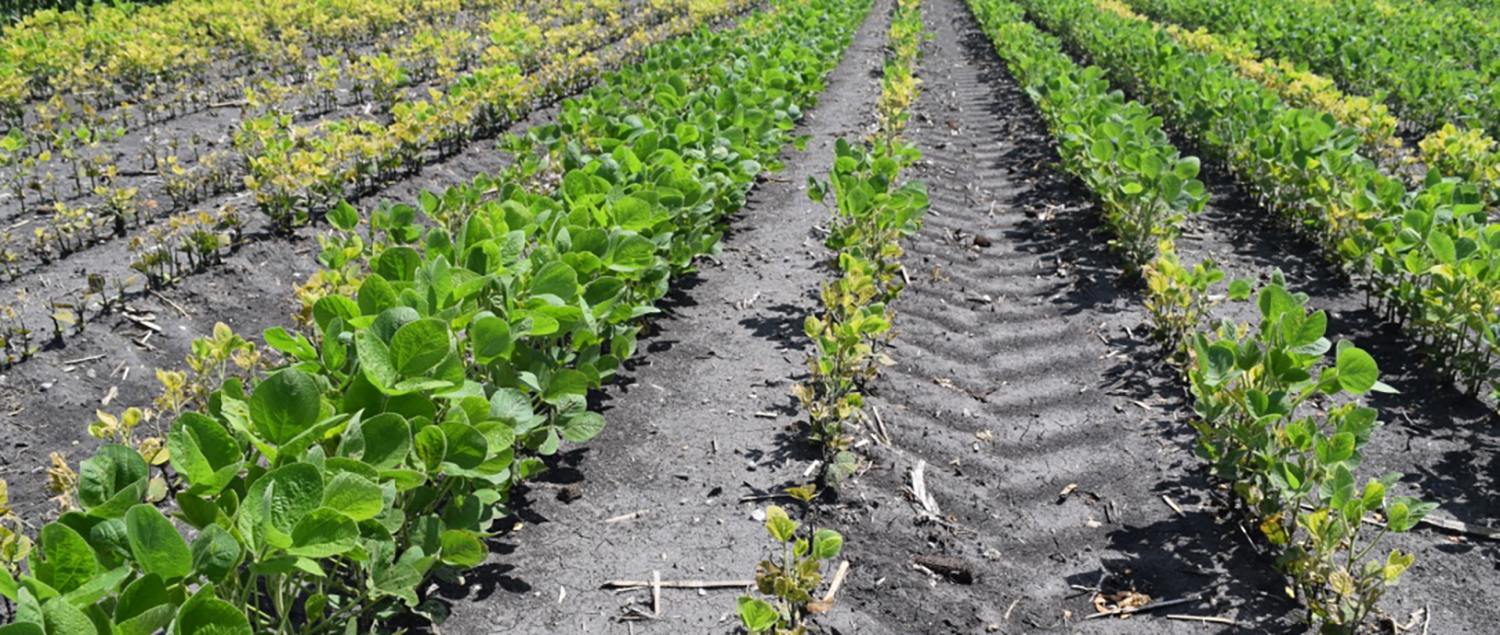
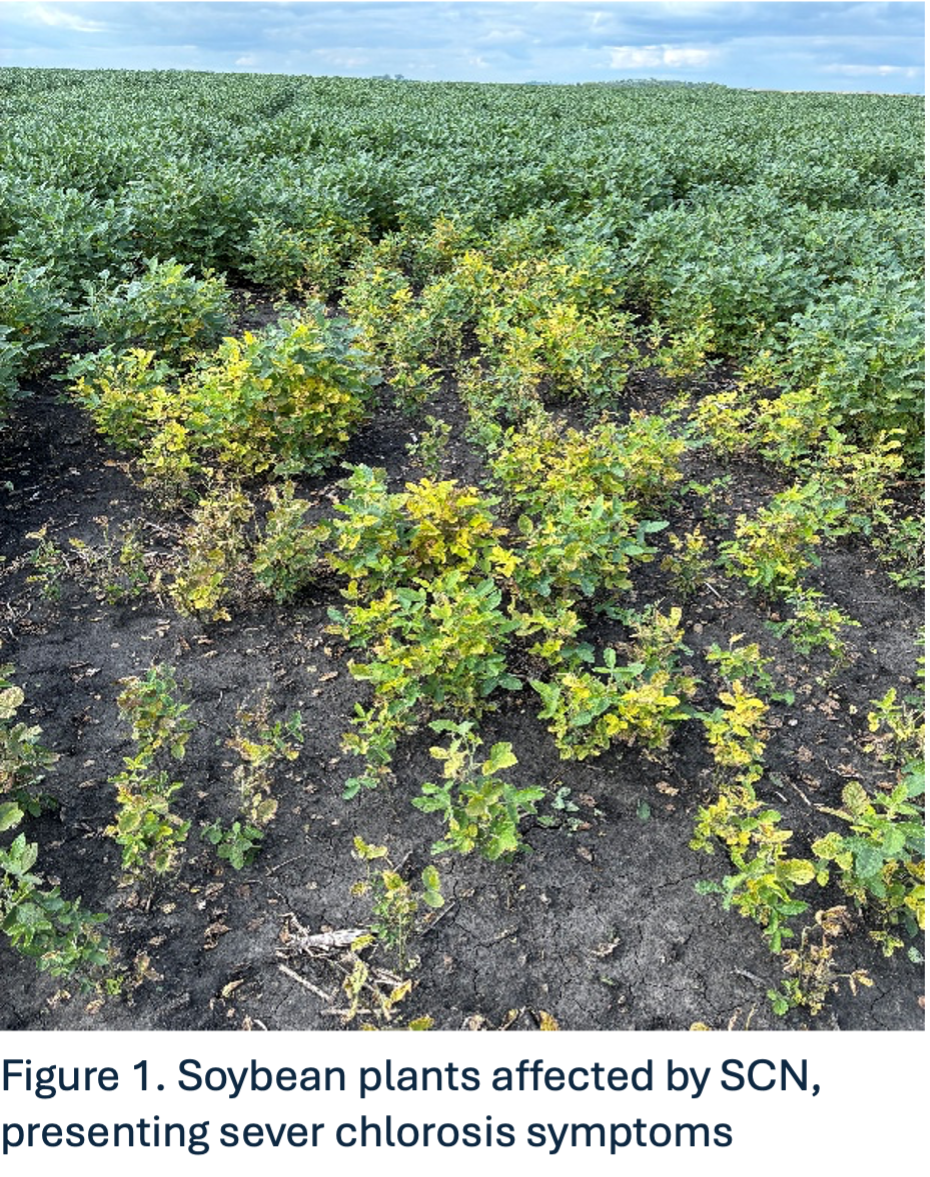
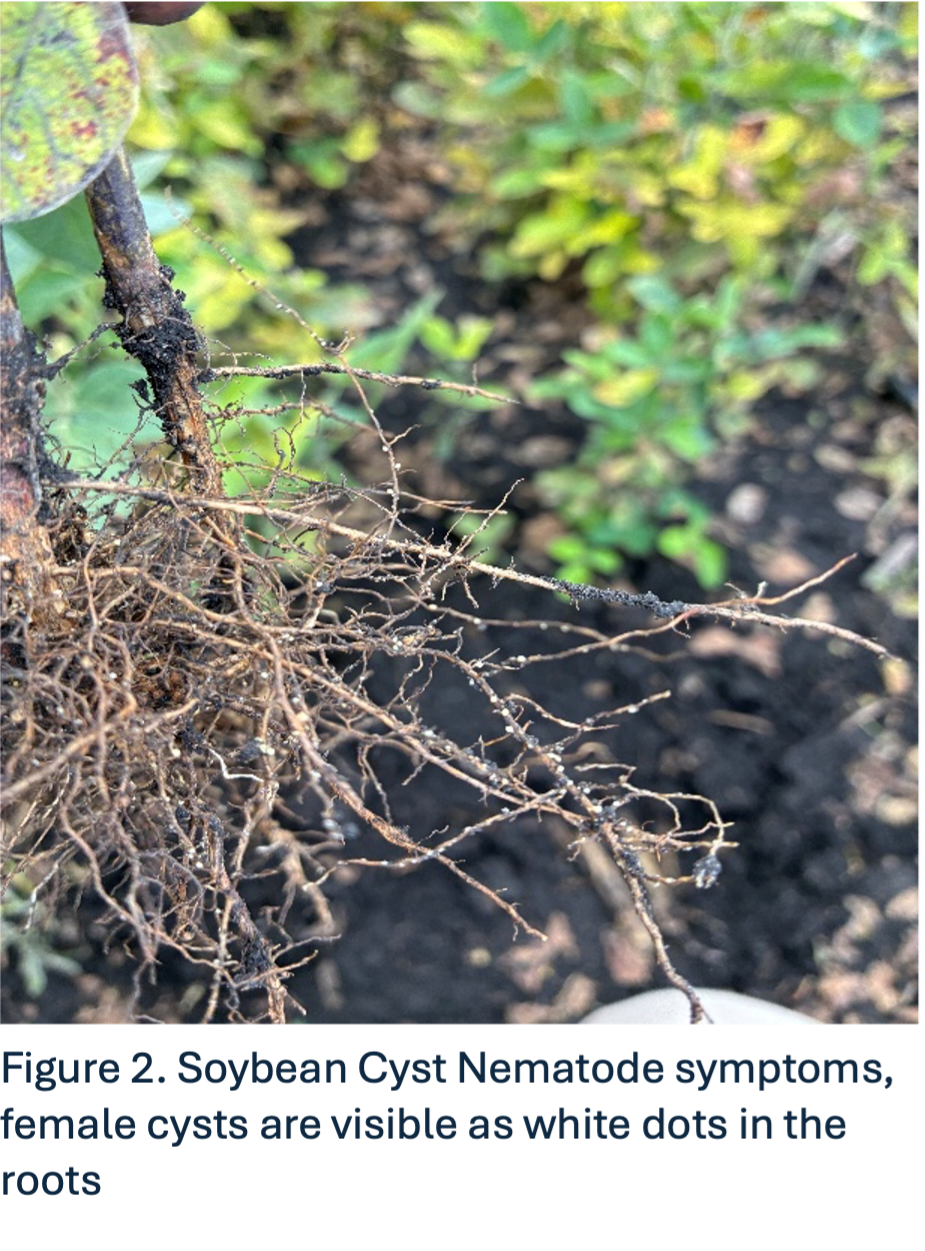
Choosing soybean seed is one of the most important agronomic and economic decisions farmers make each season. Seed accounts for a significant portion of production costs, usually around 12% of the total cost, and the variety selected directly affects yield potential, pest pressure and quality. Soybean Cyst Nematode (SCN) remains a major threat to soybean yields in Minnesota. SCN can cause yield reductions of 10–30 percent without showing any visible signs, and losses can be greater when symptoms develop. Managing SCN requires implementing crop rotation, selecting soybean varieties with different resistance genes, and conducting regular soil tests for SCN.
Understanding SCN numbers and what they mean for your field
SCN pressure cannot be evaluated solely by appearance, which is why soil testing remains the most reliable starting point. Table 1 shows how to interpret the SCN egg count soil analysis. Fields testing in the moderate to high range require careful variety selection and ongoing monitoring. When egg counts exceed 10,000 eggs per 100 cc of soil, SCN pressure is considered very high. Under these conditions, resistant soybeans may not be enough to reduce populations. Educational guidance suggests that producers may need to think about integrating non-host crops into the rotation as part of a long-term strategy to lower SCN levels.
| Table 1. Interpretation of SCN egg counts and recommended management actions | ||
| Eggs per 100 cc of soil | SCN Population Level | Interpretation and Management Guidance |
| 0–200 | Very Low | Minimal risk of yield loss. Suitable for most soybean varieties, including susceptible ones. |
| 201–2,000 | Low to Moderate | Some risk of yield loss, especially with susceptible varieties. Resistant varieties are recommended. |
| 2,001–10,000 | Moderate to High | Yield loss is likely, even with resistant varieties. Crop rotation and SCN-resistant genetics are strongly advised. |
| >10,000 | Very High | Serious risk of economic loss. Soybean production is not recommended until SCN levels decline. Rotation to a non-host crop is the best option. |
| Table adapted from University of Minnesota Extension, Dr. Angie Peltier | ||
The Female Index (FI) interpretation (Table 2) provides an additional layer of information. FI values help determine how effectively a resistance source limits SCN reproduction. Lower FI values indicate stronger resistance performance, while higher values suggest that the nematode population has adapted to that resistance source.
| Table 3. Interpretation of Female Index (FI) Levels and Their Importance for Selecting Effective SCN-Resistant Soybean Varieties | |||
| Female Index (FI) | Meaning of the FI Level | Why It Matters | Risk When Choosing a Resistant Variety |
| FI < 10 | Very strong resistance. SCN reproduction is greatly suppressed. | SCN cannot reproduce effectively, helping keep egg numbers low over time. | Low risk. Variety is performing as intended against this SCN population. |
| FI = 10–30 | Moderate resistance. SCN can reproduce, but at a limited rate. | Resistance is still useful, but the SCN population is adapting. Monitoring is important. | Moderate risk. Resistance may become less effective if used repeatedly. |
| FI > 30 | Weak resistance. SCN can reproduce freely on the “resistant” variety. | SCN populations have adapted to the resistance source (often PI 88788). Yield protection is reduced. | High risk. Variety may no longer protect yield or limit SCN increase. |
| FI > 30 with repeated use of same resistance source | Indicates major loss of resistance effectiveness. | Suggests strong adaptation of the SCN population. | Very high risk. A different resistance source or a non-host crop is needed. |
| Table adapted from University of Minnesota Extension, Soybean cyst nematode management guide | |||
What Minnesota data shows about resistance sources and SCN inbred lines
In Minnesota, a statewide effort led by Dr. Senyu Chen evaluated 182 SCN samples collected across soybean-producing regions. Each SCN population (SCN inbred lines) was tested against soybean lines carrying different resistance sources to determine how well current genetics limit nematode reproduction. The results are presented in Figure 3.
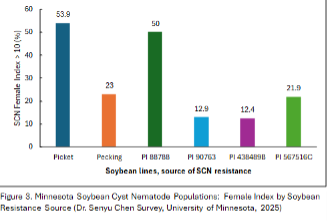
The data show that many SCN populations have FI values greater than 10 on several commonly used resistance lines, indicating that nematodes can reproduce at moderate to high levels even on varieties labeled as resistant. This highlights a key reality for Minnesota farmers: Not all resistance sources perform the same against current SCN populations, and effectiveness can change over time, and from farm to farm.
Many commercial soybean varieties still rely on PI 88788 as a source of resistance. While PI 88788 remains an important tool, Minnesota results suggest that some SCN populations reproduce more readily on these lines compared with alternative sources such as Peking. The objective is not to eliminate any single resistance source, but to use research-based information to avoid repeated use of the same genetics year after year and to support more durable SCN management.
Choosing soybean varieties for my farm
Choosing the right variety starts with knowing your SCN numbers and understanding how resistance sources perform in Minnesota. Farmers should review soil test results, compare them with the SCN threshold table, and then use the Female Index information to evaluate which resistance sources are most appropriate for their fields.
In practical terms, managing SCN starts with rotating resistance sources. Avoid planting soybeans with the same source of resistance year after year, because repeated use puts pressure on SCN populations and allows them to adapt. If your fields have relied heavily on PI 88788, look for opportunities to include varieties with alternative resistance sources, such as Peking, when they fit your maturity group and agronomic goals. Integrating additional resistance sources when available is also valuable, since diversifying genetics helps reduce selection pressure and can improve SCN control over time. The key is simple: rotate resistance sources within your cropping system so you are not selecting for the same SCN population every season.
Variety selection should aim to maintain yield while supporting a healthier cropping system over time. Matching the resistance source to SCN pressure, regularly monitoring egg counts and adjusting seed choices as populations change are all part of a proactive management approach. The objective is not only strong performance this season but also preserving resistance effectiveness for future years.
Key Points for Farmers
- Seed selection influences both production costs and long-term SCN management.
- Soil testing and SCN egg count interpretation tables help define field risk.
- Female Index data from Minnesota show differences in how resistance sources perform.
- Rotating resistance sources and diversifying genetics can help SCN mitigation and control.
- Very high SCN levels (>10,000 eggs per 100 cc) indicate elevated risk and may justify considering non-host crops as part of a broader cropping strategy.
Reading recommendations:
- Soybean Cyst nematode management guide, University of Minnesota. https://extension.umn.edu/soybean-pest-management/soybean-cyst-nematode-management-guide#minnesota-hg-type-test-1497662
- Know your SCN numbers: Free fall sampling program available. University of Minnesota. https://blog-crop-news.extension.umn.edu/2023/09/know-your-scn-numbers-free-fall.html
- Genetics of soybean cyst nematode virulence and morphometric traits. Senyu Chen, 2025. https://www.soybeanresearchdata.com/download.aspx?file=Progress5File&name=55537_draft_24-25_Final_Report_2025-5-30.pdf